Rosepetal AI
Rosepetal Research

Applied AI research for industrial inspection

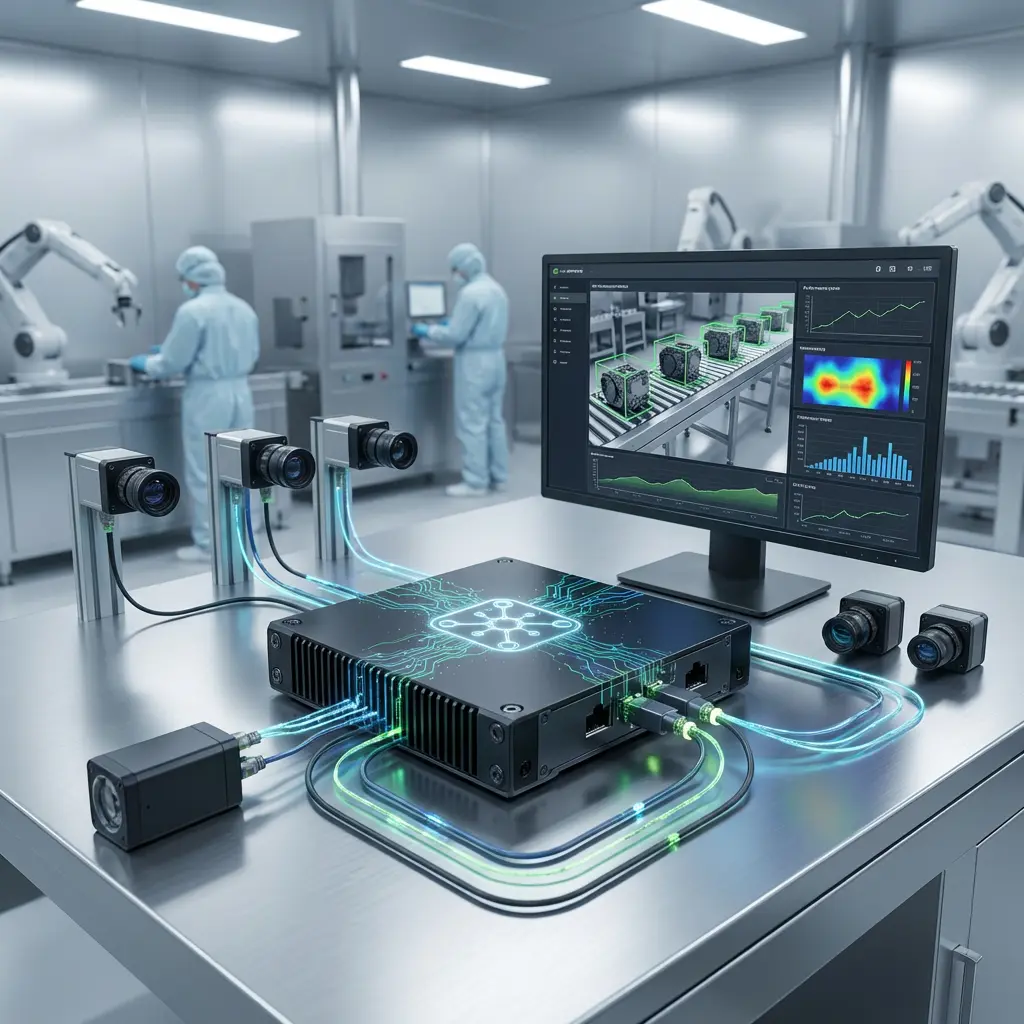
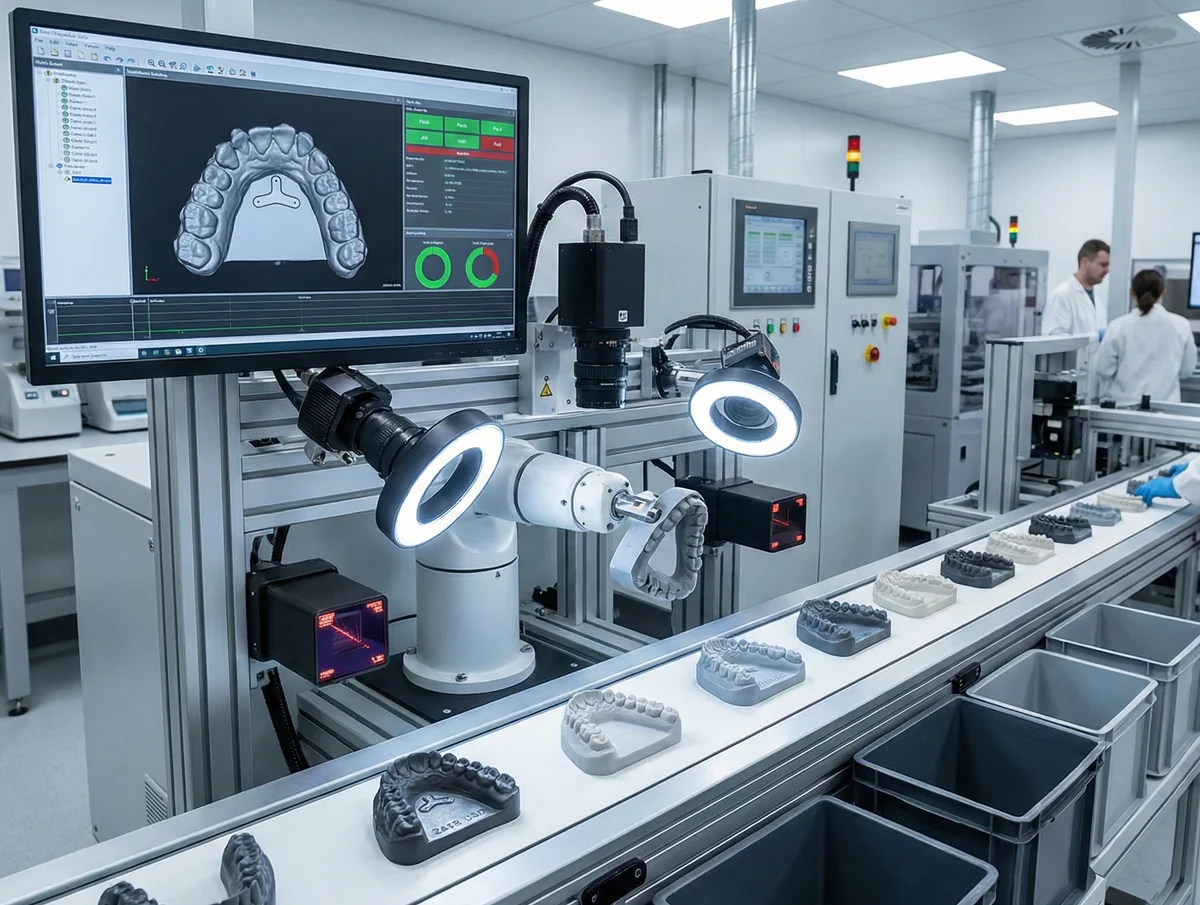
Visual inspection, process understanding, and edge-ready quality control. We bridge cutting-edge AI research and real industrial deployment — building models that are accurate, explainable, data-efficient, and able to run on the hardware inside the factory.

What Rosepetal Research Does

Our research department develops computer vision and multimodal AI systems designed specifically for manufacturing environments — not for academic leaderboards. Every project starts from the conditions that actually constrain a production line.

The result is a pipeline that runs in both directions: production problems become research questions, and validated research becomes capabilities inside the Rosepetal platform, its edge inference stack, and Rosepetal Flows.

Bring us a problem
6

Active research projects

6

Research themes driving them

2

Repositories already public

OK / NOK

Weak labels are often all we need

Active Research Projects

Six lines of work, from distillation and risk-calibrated cascades to process verification and dataset construction.

Detector-to-Scout Distillation

Public

Distilling box-supervised defect detectors into compact image-level anomaly scouts

Knowledge transfer from box-supervised defect detectors into compact image-level anomaly scorers, so a heavy detector trained offline becomes a small model that fits inline inspection hardware.

  • Target construction: cached teacher predictions become pseudo-box records
  • Distillation training: Hungarian matching assigns targets to student queries
  • Teacher-free deployment: a single scalar anomaly score, exportable to ONNX

View repository

Selective Inspection

Public

Risk-calibrated weak supervision for efficient industrial visual inspection

An inspection cascade that spends compute only where suspicion remains, trained from image-level OK/NOK labels alone — no bounding boxes, no masks.

  • Lightweight image scorer learned from OK/NOK labels only
  • Risk-calibrated Fast-OK-Exit gate with an operator-chosen missed-NOK budget
  • Split-conformal accept / review / reject layer with finite-sample guarantees
View repository

RP-ForgeVL

Public release soon

Few-shot grounded multimodal industrial visual inspection

Learning acceptance criteria from a handful of reference examples and a textual description of the defect, instead of from a fully annotated dataset.

  • Small reference sets of OK and NOK samples
  • Textual defect descriptions as part of the supervision
  • Bounding boxes, oriented boxes, polygons, and segmentation masks
Repository opening soon

RP-DETR

Public release soon

Real-time anomaly detection for high-resolution manufacturing inspection

A two-stage architecture that finds tiny defects in large images without paying the cost of full-resolution processing everywhere.

  • Fast full-image scan to flag suspicious regions
  • Focused high-resolution inspection of the flagged areas
  • Normality verification against OK samples to cut false positives
Repository opening soon

RP-ProcessLens

Public release soon

Vision-based process verification from manufacturing video

Checking that operators, tools, machines, and parts follow the expected procedure — catching deviations before they turn into defective product.

  • Missed steps, wrong tool usage, incorrect operator-machine interaction
  • Abnormal timing, unexpected sequences, missing components
  • Unsafe operations, with evidence a quality team can review
Repository opening soon

RP-IAD

Public release soon

Large-scale industrial anomaly detection dataset construction

A dataset built around real inspection conditions rather than academic benchmarking, capturing how much legitimate variation an OK sample actually has.

  • Diverse materials, parts, defect types, and defect scales
  • Realistic acquisition conditions and curated OK/NOK samples
  • Localization annotations for detection, segmentation, and grounded inspection
Repository opening soon

Research Themes

The questions that cut across every project.

Data-Efficient Learning

Industrial defect data is scarce, imbalanced, and expensive to annotate. We reduce what a model needs through few-shot learning, reference-based approaches, OK-sample modeling, and human-supervised auto-labeling.

Grounded and Explainable Inspection

A quality team needs more than an OK/NOK verdict. Systems produce grounded evidence — regions, masks, comparable examples, scores — that a human can review and act on.

High-Resolution Understanding

Many manufacturing defects are small, subtle, and localized. We investigate architectures that reason over large images while preserving detail exactly where it matters.

Real-Time and Edge Deployment

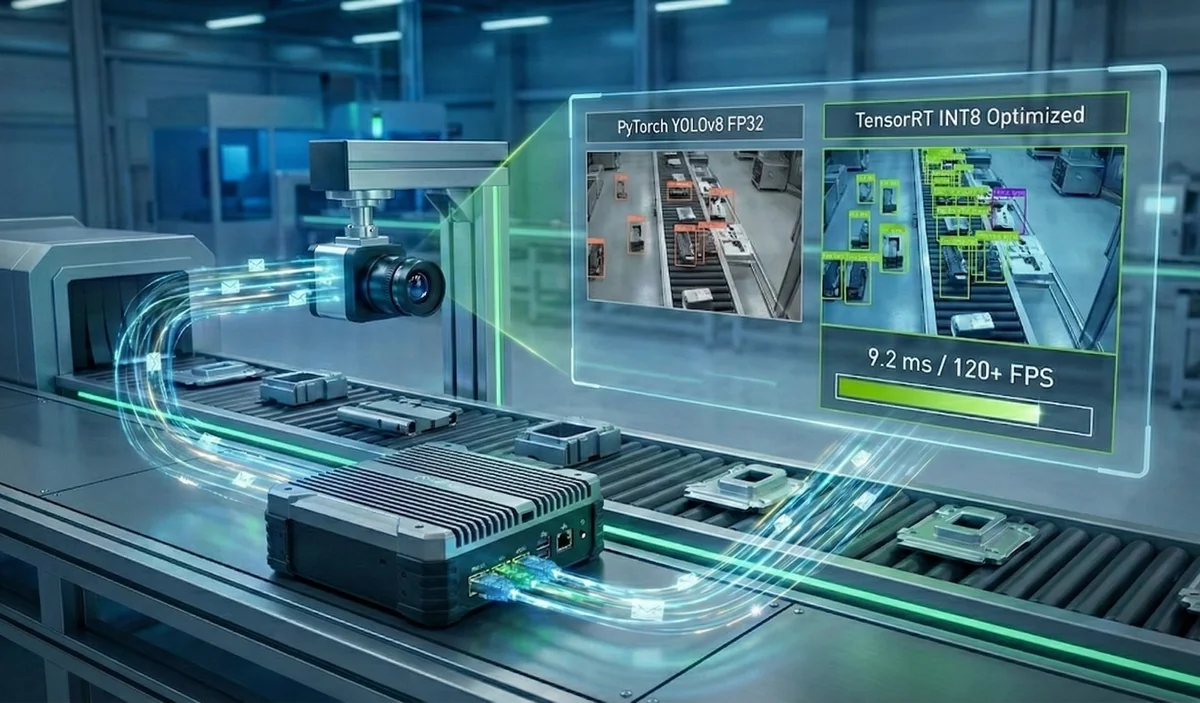
Industrial AI must work under real production constraints. Prototypes are judged on latency, memory, GPU utilization, multi-camera operation, and robustness on edge hardware.

Human-in-the-Loop Quality Control

The goal is not to replace quality experts. Operators, technicians, and engineers supervise, correct, validate, and improve the behavior of the system over time.

Process-Aware AI

Manufacturing is more than isolated images. Understanding sequences, operations, timing, tools, and context extends inspection toward video-based process verification.

From Research to Product

Four principles that decide whether an idea makes it out of the lab.

1

Start from real industrial constraints

Every project begins with production realities: cameras, lighting, cycle time, edge hardware, operator workflows, and customer data.

2

Prototype scientifically

Ideas are validated through controlled experiments, datasets, metrics, and ablation studies — not demos.

3

Design for transfer

Architectures and training methods stay compatible with the Rosepetal platform, its datasets, the edge inference stack, and Rosepetal Flows.

4

Preserve traceability

Industrial AI decisions must be auditable. Models should produce outputs that can be reviewed, compared, and improved.

Research Notes

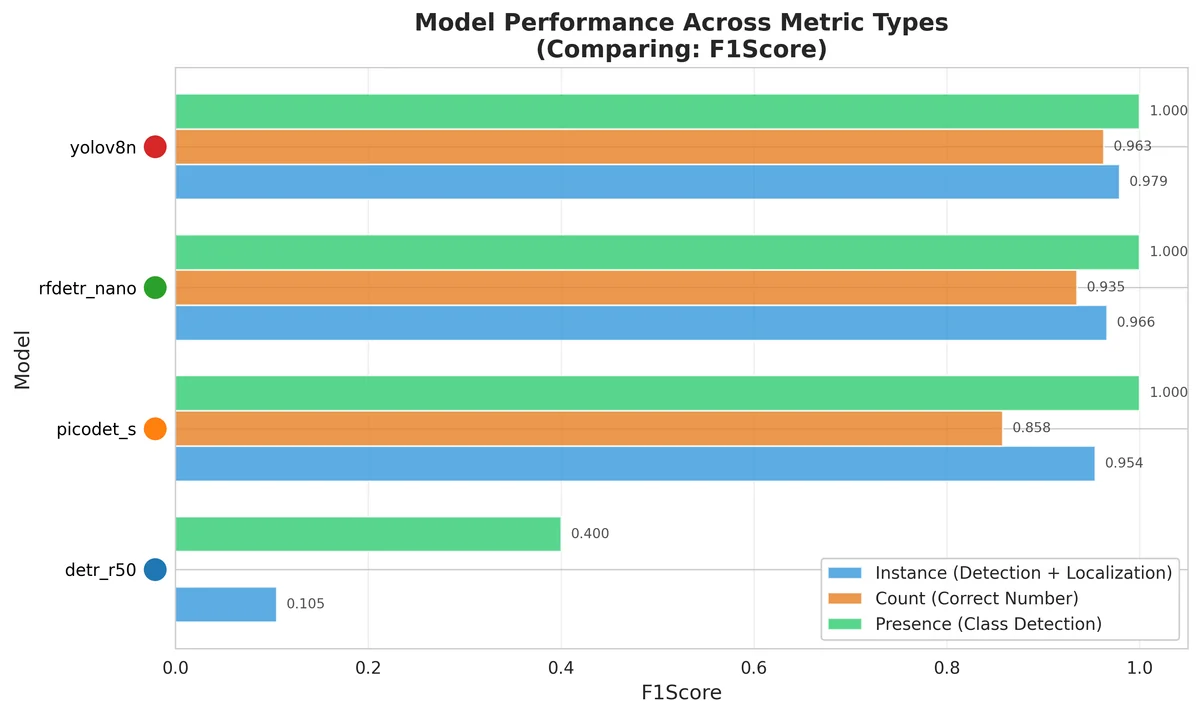
Benchmarks and experiments we have published, with methodology and raw numbers.

Collaborate With Our Research Team

Hard defect, scarce data, tight cycle time, or a process that needs verifying on video — those are the problems our research exists for.